About
We started by getting it wrong
Eleven Cloud finds the single operation costing a company the most and replaces it with AI. Not a menu of services and not a build shop. The product is the finding.
It started with a wrong answer
In 2021 Venelin was running a service business doing a little over $4M. Everyone inside it agreed on the problem, because it was the loudest thing in the building. The support inbox was drowning. Three people sat in it all day and still finished behind.
So he hired a fourth. Two months later the inbox was exactly as full and payroll was one person heavier.
That failure is the reason this company exists. The hire answered a question nobody had checked.
What the counting showed
He stopped fixing things and started counting them, measuring what each operation cost rather than what felt heaviest in the morning. Loaded hours. Deals that went cold while somebody waited. Cash sitting in receivables nobody had time to chase.
Support came fourth on that list.
The expensive operation was quoting, three steps upstream. Estimates took two days, and by the time one arrived the customer had already formed a theory about what they were buying. Half the support volume was people asking about a thing the quote should have answered.
Fixing support would have made the building quieter and left the cost exactly where it was. The fourth hire was the price of finding that out.
Quoting got replaced first. Support volume fell without anyone touching support, and two of the three people moved onto work that a system cannot do. Over the next few years the same exercise ran through the other businesses he had built, and then through companies belonging to people who asked him how he had done it.
The pattern held every time. Owners are almost always right about the symptom, and they are often wrong about the cause. There is no version of this work where you can skip the counting.
Why the assessment is the product
Every other firm in this market sells build capacity. You arrive with a specification, they quote it, they build it. That model works when you already know what should be built, and it assumes the hardest part of the job is the engineering.
The hardest part is choosing correctly, because a system built beautifully against the wrong operation still leaves the money where it was. That decision happens before anyone writes a line of code, and almost nobody is being paid to get it right.
So the assessment is what we sell. Every operation in the company, whether it can be replaced, and what it is worth if it is. In writing. The build is what happens after, and sometimes it does not happen at all.
Four things we hold to
The engagement is designed to end
A monthly retainer pays for continued involvement, which is fine when there is continued work and corrosive when there is not, because it quietly decides what gets built. Systems that need constant attention justify a retainer. Systems your own team can run do not. We charge for the project, the project ends, and everything lives in your accounts on your billing from the first week. If you never call again, that was the plan.
Every system has a written list of what it may not decide
Agreed before anything is built. What it must never decide alone, what it does when it is unsure, the value above which it stops, and the person it hands to by name. A system with clear limits sounds smaller than one without. It is also the one still running in eighteen months, and those two facts are the same fact.
One named person inside your company owns it
Not a department. A person, trained until they can run it, correct it, and switch it off without asking us. There is a written runbook and nothing depends on us being reachable. Handing over a login and a recording is not handover, and everyone in the room knows it at the time.
We will tell you not to buy
If you have a technical person who will own this, buy a platform and keep your money. If the work follows a clear rule with no judgment in it, buy a connector for $40. If AI is going into the product you sell, hire, because you cannot outsource what you are selling. Some assessments end in one of those sentences, and that is a better outcome than a build nobody needed.
Where we are now
Ten systems live inside real companies. Customer support, speed to lead, quoting, client onboarding, collections, lead qualification, job dispatch, floor knowledge, hiring screens, and same-day invoicing.
They sit in manufacturing, distribution, home services, professional services, field services, and a multi-location clinic group. The range matters less than the shape: in every one of them, an operation the company used to perform is no longer performed by people.
We take few projects, and the reason is arithmetic rather than positioning. Four people cannot run more than three assessments a month without the counting getting sloppy, and the counting is the whole product.
The four of us
Four people is the entire company. It is why we say no more often than yes, and it is why nobody is handed to a junior after the sale.
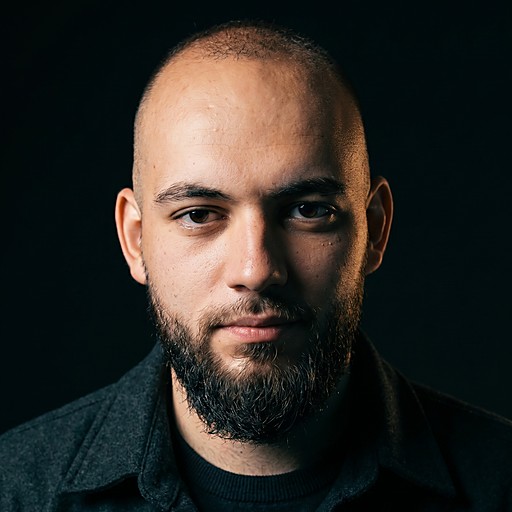
Venelin
Founder · Sofia
Venelin has built SaaS, ecommerce, and service businesses, three of which still run without him in the week. He has spent eight years putting AI into live operations at this size, starting with his own. Before that he shipped software inside a Fortune 500.

Radoslav
Head of Growth · Sofia
Radoslav has managed over $100 million in ad spend. He scaled two education companies in Europe to eight figures, then rebuilt their acquisition so growth no longer sat on the founder. He runs customer acquisition and pricing.

Alex
Chief Technology Officer · Sofia
Alex has spent ten years in production AI rather than research. He has put more than twenty systems live inside 7- and 8-figure companies, replacing quoting, support, dispatch, and onboarding.

Jasmine
Head of Operations · Miami
Jasmine runs a $40 million operation with more than 80 people across continents. She put in the processes that keep it running without her in every decision, and she has spent a decade inside operations of this size.
Most of this work is not model work. It is recognizing what an operation looks like from the inside once it has started costing more than anyone has counted, which is why an operator sits on this team rather than only engineers.
Where we work from
Two offices, seven hours apart. The distance was chosen, and it shapes how every build runs.
An assessment is people work. Somebody sits with your dispatcher, watches a quote get written, and asks the questions that only make sense while the work is in front of them. That has to happen in your hours, which is why the client side of the company sits in Florida.
Building is the opposite. It wants uninterrupted time. Sofia starts while Miami is asleep, so a question raised at five in the afternoon on the client side has an answer waiting the next morning. The two offices overlap for about four hours a day, which is enough for the calls and short enough to protect the build.
Sofia
SofiaBulgaria
The builds happen here. Bulgaria has spent twenty years as a back office for enterprise software, which means the engineers available at this level have shipped into companies far larger than the ones we work with, and they have seen what happens to a system after handover.
Miami
MiamiUnited States
Every client is a US company, so the people who sit inside your operation during the assessment sit in your time zone. Your operations manager is not explaining how quoting works at nine at night.
Who this is for
Companies doing roughly $3M to $10M, where revenue looks healthy and the business feels fragile. Too big to run on memory, too small to carry a management layer. Every real decision still routes back to the owner, hiring has stopped making the week lighter, and nobody can say which operation is the expensive one.
Below that range it is usually a people or process problem, and software on top of it makes the problem more expensive. Above it, somebody inside should already own this, and the work changes shape into governance, data residency, and getting one operation out of pilot.
We say this on the first call rather than in month six.
Anything else, including whether you are a fit, goes to hello@elevencloud.ai. A person reads it.
Read next
Find out what your most expensive operation is
The assessment covers every operation in the company, not only the one you would name. You get it in writing, and you can build from it with or without us.